
Ceramic pendant lights, marble pendant lights and travertine pendant lights can all support an organic, material-led interior. The better specification depends on what your project needs to repeat, support and maintain. A small bedside design may not scale successfully into a lobby feature. A sculptural shade may achieve the desired silhouette but require additional sample development.
This guide compares ceramic vs marble vs travertine pendant lights from design and procurement perspectives. For interior designers, architects, hospitality designers and project buyers, the useful question is: which material delivers the intended appearance within the actual production, installation and purchasing conditions?
Ceramic vs Marble vs Travertine: Quick Comparison
Use this material selection matrix to shortlist a direction, then verify it against a finished sample. Visual weight describes appearance; it does not establish fixture weight.
| Factor | Ceramic | Marble | Travertine |
|---|---|---|---|
| Visual character | Form-led, fired, handcrafted | Veining-led, refined stone identity | Pore-led, warm architectural texture |
| Surface variation | Glaze, texture and firing | Mineral pattern and finish | Pores, layers and finish |
| Shape flexibility | Curved and irregular forms; process-dependent | Curves possible; machining matters | Curves possible; section design matters |
| Typical visual weight | Soft or substantial, depending on form | Often dense, architectural presence | Often earthy, architectural presence |
| Physical weight consideration | Check size and wall thickness | Confirm finished stone assembly weight early | Review thickness, assembly weight and fixing together |
| Handmade variation | Forming, glaze and firing differences | Finishing and machining differences | Finishing, filling and machining differences |
| Natural pattern variation | Not natural stone veining | Vein direction, tone and pattern | Pore distribution, layers and tone |
| Large-size feasibility | Forming, drying and firing constraints | Thickness, machining and suspension constraints | Thickness, machining and suspension constraints |
| Installation consideration | Verify mounting and ceiling support | Verify stone connection and ceiling support | Verify stone connection and ceiling support |
| Packaging risk | Rims, projections and surface | Edges, drillings and thin sections | Edges, drillings and thin sections |
| Repeated project consistency | Approve glaze and dimensional range | Approve stone and veining range | Approve tone and pore range |
| Best project uses | Sculptural dining, villa and boutique features | Refined stone-led suites and reception areas | Warm minimalist dining and hospitality features |
Ceramic Pendant Lights: Best for Sculptural Form and Handmade Surface
Choose ceramic over stone when the silhouette or fired surface carries the concept. Rounded forms, irregular profiles and textured shades give handmade ceramic lighting a different character from a cut stone body. Feasibility still depends on size, wall thickness, forming method, firing and the supporting structure.
Matte, glazed, raw-look, textured and reactive-glaze finishes offer different surface directions. Their variation comes from forming and firing rather than geological veining. Define which irregularities add character and which would interrupt a repeated installation.
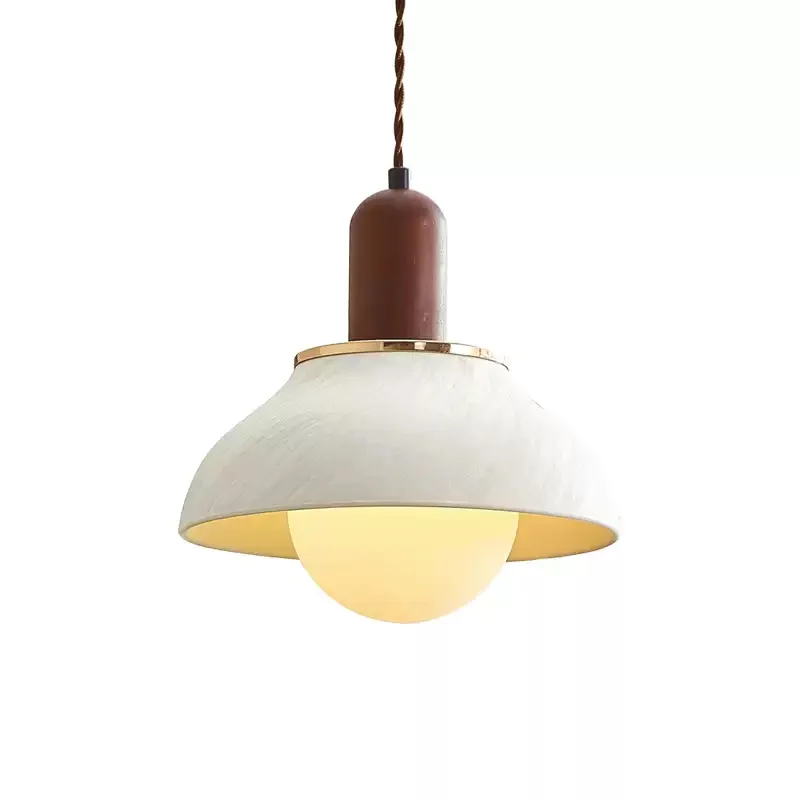
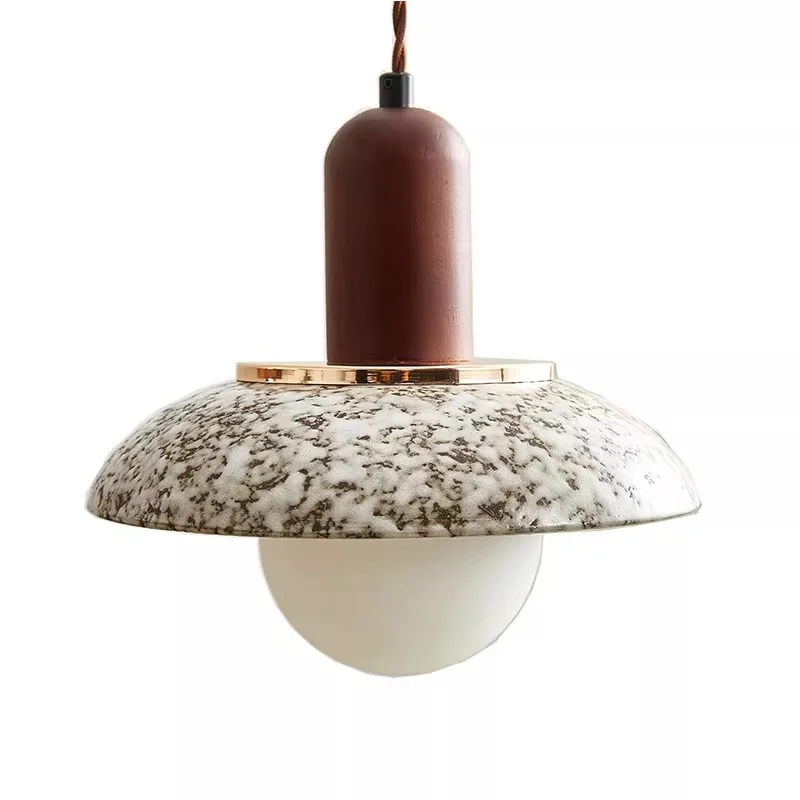
Among OBBAO’s Ceramic Pendant Lights, OBTC015 combines a pale ceramic shade with wood and glass, while OBTC009 shows a mottled ceramic surface. Both product specification tables identify ceramics, wood and glass. They illustrate why a stone-like surface should not be mistaken for a stone material specification.
These directions can suit boutique restaurants, villas, designer residences and small feature areas. For broader finish and styling ideas, use the separate ceramic lighting design guide.
Marble Pendant Lights: Best for Refined Natural Stone Character
Marble is often selected when the project calls for a refined natural-stone appearance and visible veining. It can connect a pendant to stone interiors and metal details, with a polished or honed appearance where the selected product permits. Luxury depends on design and execution, not a material hierarchy.
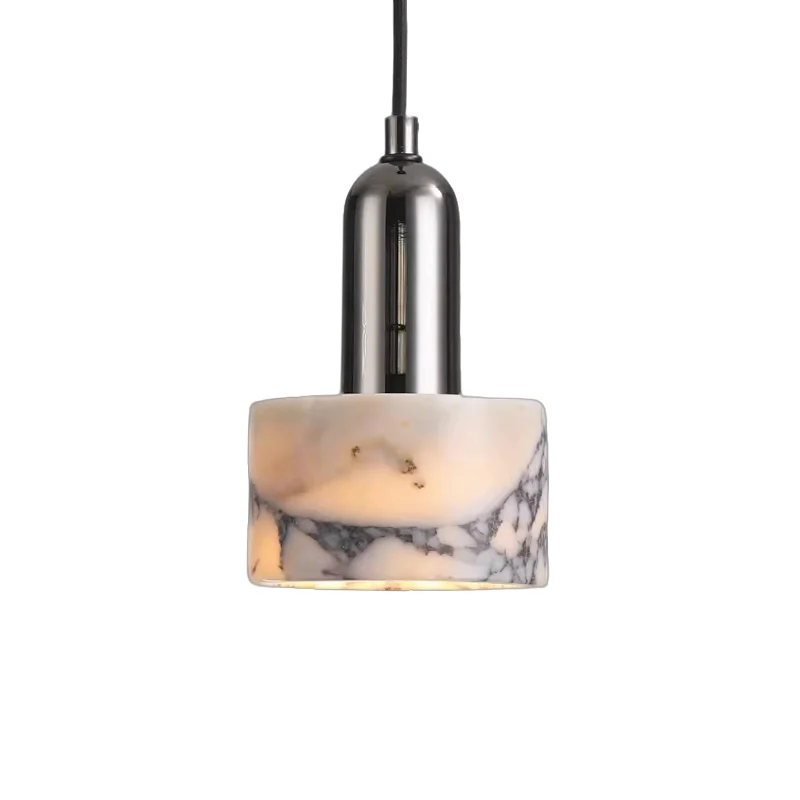
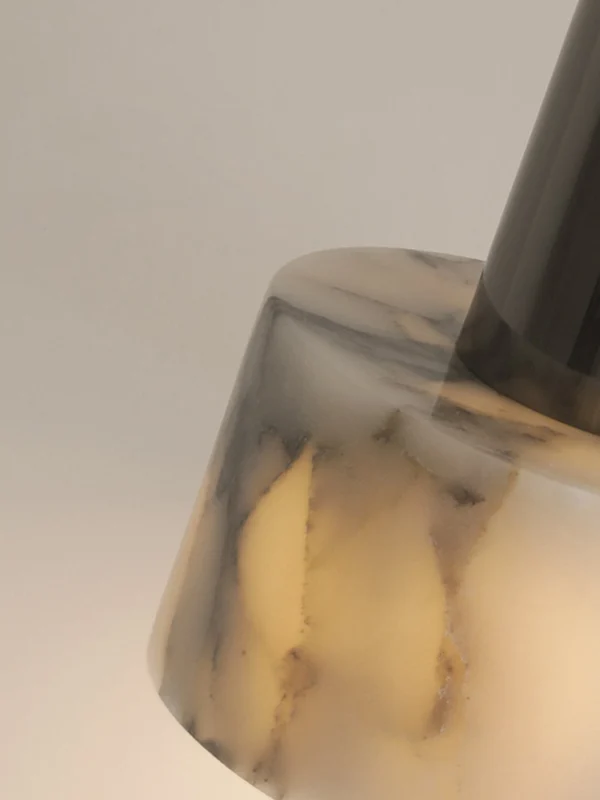
OBBAO’s OBBV059 marble pendant pairs a veined stone body with a dark upper fitting. Its product imagery makes pattern placement a useful sample-review question: will each visible face work above a reception counter or beside a bed?
Ask which stone is supplied, how much tone and veining variation is expected, and whether the sample represents that range. Confirm finished weight, drilling, fixing, packaging and replacement stone-part feasibility. Decide whether variation is a design feature or something that must be controlled within an agreed range.
Travertine Pendant Lights: Best for Warm, Architectural Texture
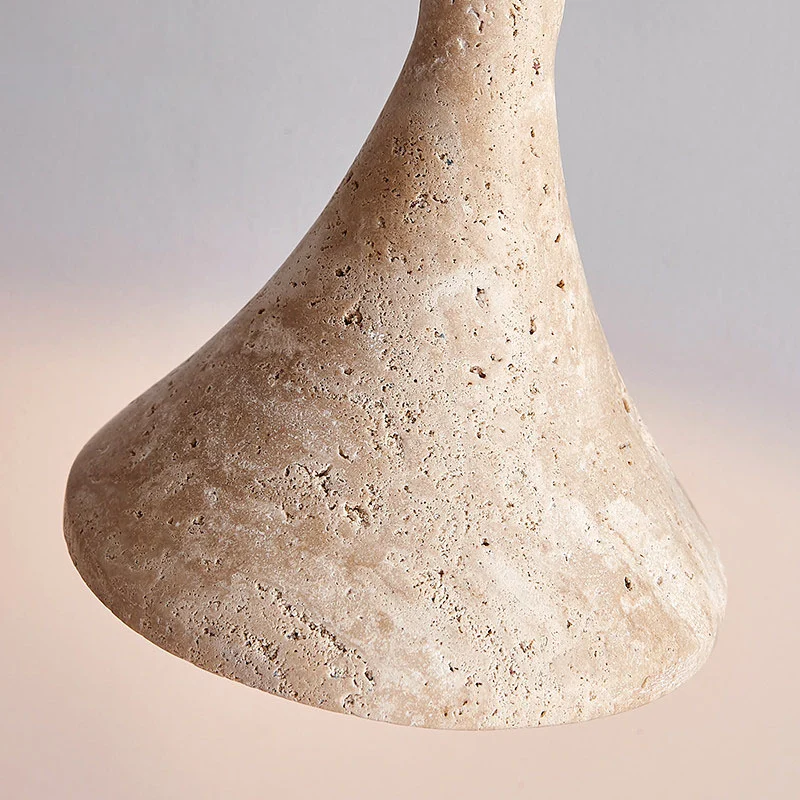
Consider travertine when pores, layered texture and an architectural stone feeling matter more than pronounced veining or a custom glaze. It is commonly associated with warm neutral tones, but appearance depends on the selected stone; beige is not a universal specification.
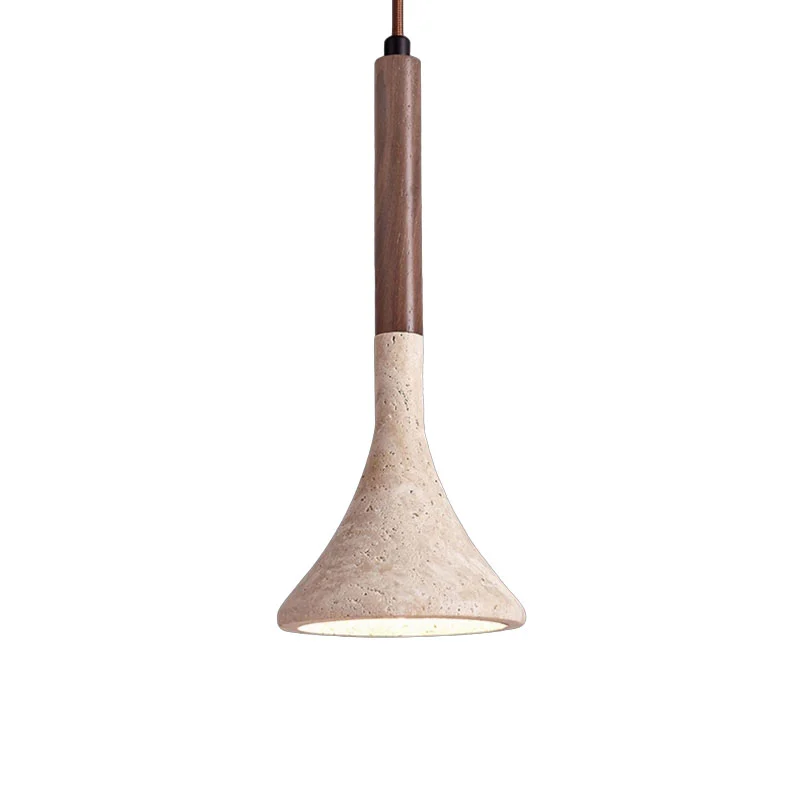
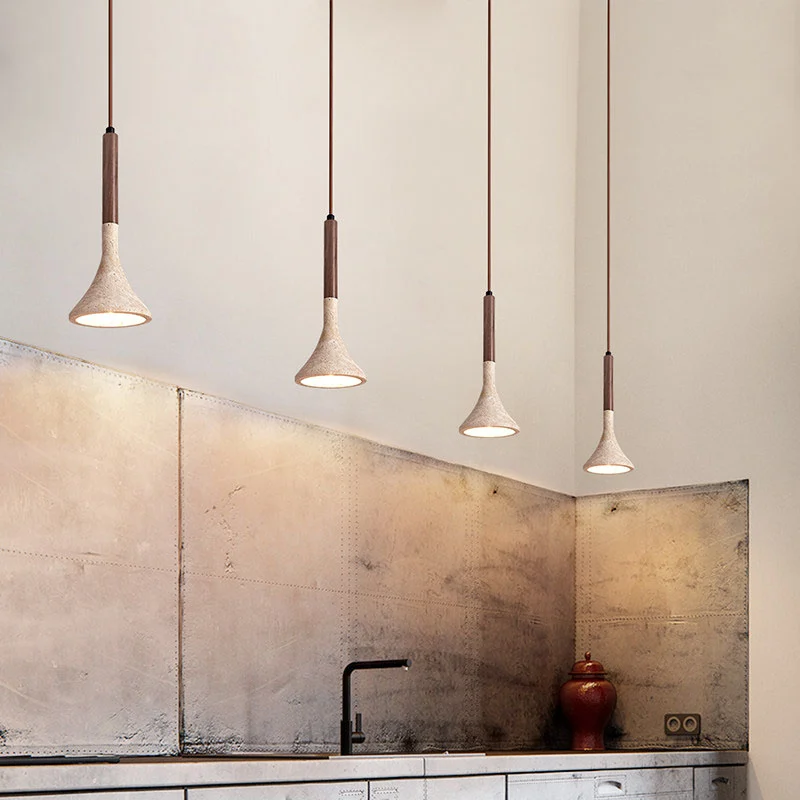
OBBAO’s OBBV075 travertine and wood pendant has a flared stone shade and wood upper section. Its specific product table identifies natural travertine stone and solid wood. Review that combination when a Mediterranean or warm minimalist concept needs both texture and a slender vertical element.
Approve stone selection, pore appearance, filled or unfilled appearance where relevant, finish, tone range and edge quality. Check weight, drilling, mounting and packing alongside the visual sample. Browse the Marble / Travertine Lighting collection or the detailed guide to marble and travertine pendant lights for further stone options.
Ceramic vs Marble vs Travertine: How Do They Actually Differ?
1. Shape and Design Freedom
Ceramic often suits sculptural, curved or irregular shade development. Marble and travertine can also form curves, but complex shapes require close attention to stone cutting, drilling, thickness and structural feasibility. For the same reference silhouette, request a feasible section and hardware connection before selecting the material. A successful small sample does not establish feasibility at a larger size.
2. Surface Character
In ceramic vs stone lighting, distinguish a fired or glazed surface from a naturally patterned body. Marble emphasizes veining; travertine often emphasizes pores and layered texture. All three can feel organic. Compare physical surfaces beside the actual timber, plaster and upholstery palette, under the intended lighting, rather than choosing from isolated catalogue photographs.
3. Color Consistency
A custom ceramic glaze can be developed toward a target color, but firing, texture and handmade forming may produce differences. Marble varies by tone and veining; travertine varies by tone, pores and pattern. None should be specified as universally color-identical. Approve an acceptable range, including boundary examples, and decide how adjacent pendants will be visually grouped.
4. Weight and Ceiling Installation
Weight depends on shade diameter, material thickness, stone section, metal structure and canopy. Clusters also require the number and arrangement of pendants to be considered. Confirm finished marble and travertine assembly weights early, particularly for long suspensions, staircases and double-height spaces. Large ceramic shades need the same attention.
Final fixing and ceiling support should be reviewed against the actual fixture weight and site conditions by the responsible project or installation team. Material name alone cannot establish an acceptable fixing method.
5. Fragility and Shipping Risk
All three materials need protection. Ceramic rims, projections and glazed surfaces may be vulnerable during handling. Stone can chip or crack at edges, drilled points and thin sections; fixture-to-hardware contact also needs review. Packaging risk depends on shape, size, weight and shipping route. Request a packing arrangement for the actual design, including how separate components are restrained, rather than ranking materials by assumed toughness.
6. Which Material Is Better for Large Pendant Lights?
There is no universal choice. Large ceramic development involves forming, drying, firing, wall thickness and possible deformation. Large stone designs involve material section, machining, weight, suspension and transport. If the requirement is visual volume, consider multiple smaller units, a cluster or a mixed-material design. Compare the complete installation and packing proposal before enlarging a single shade.
7. How the Material Changes the Light Effect
An opaque ceramic shade usually directs light toward its openings, subject to construction. For natural stone pendant lights, do not assume the body transmits light: stone may serve mainly as decoration. Check openings, thickness, diffuser, bulb position, LED location and inner surface. Review a lit sample from seated and standing viewpoints; an attractive unlit surface does not establish glare control or useful light distribution.
8. Cleaning and Maintenance
Glazed ceramic and textured or raw-look surfaces may require different maintenance. Marble and travertine care depends on finish and treatment. Confirm the recommended maintenance method for the exact finish supplied. For restaurants and hospitality spaces, discuss dust, touch points, kitchen exposure and access. A texture that suits the concept still needs a workable cleaning plan at its installed height.
Not sure which material fits your lighting concept? Send the reference image, target size, project type and quantity. The material direction can be reviewed together with weight, finish, installation and sample requirements. Discuss the concept with OBBAO.
Which Material Works Best for Different Project Types?
Specify by location within a project. Pendant lights for hotels may need different materials in guest rooms, the restaurant, lobby and suites; one choice need not cover every area.
| Project situation | Ceramic | Marble | Travertine | Main decision |
|---|---|---|---|---|
| Boutique restaurant | Handmade, artistic atmosphere | Refined stone detail | Warm architectural character | Cleaning, glare, weight and table scale |
| Boutique hotel | Guest-room or dining features | Suite or reception accents | Warm lobby or restaurant features | Zone-specific light, repetition and maintenance |
| Villa | Sculptural dining or bedroom focal point | Stone-led entrance or island detail | Textured dining or entrance accent | Scale, ceiling and surrounding materials |
| Retail / showroom | Distinctive form or glaze | Recognizable veining | Textured natural identity | Brand concept and repeat installations |
For pendant lights for restaurants, compare the lit shade at table level. For pendant lights for villas, review dining rooms, islands, bedrooms, entrances and stairwells separately. If a hotel brief also considers a potentially lighter shade construction, see ceramic vs fabric pendant lights for hotels and still verify finished weight.
Match the Material to the Interior Language
Wabi-sabi: ceramic can express forming and firing; travertine can express pores and natural irregularity. Organic modern: all three can work; decide whether form or stone identity should lead. Mediterranean: ceramic and travertine offer useful starting points without excluding marble. Contemporary luxury: marble can establish a strong stone identity, while sculptural ceramic can be equally considered and distinctive. Decorative lighting materials should support the interior rather than imply a price-based hierarchy.
What Changes From a Buyer’s Perspective?
Sample Approval
For ceramic, approve glaze, shape, texture and dimensions together. For marble, approve stone tone, veining range, drilling and finish. For travertine, approve tone, pore appearance, finish and natural variation. An attractive single sample is insufficient evidence of a repeatable visual range.
Bulk Production
Ceramic orders need agreed tolerances for firing results, glaze and dimensions. Stone orders need attention to material lots, tone, veining, machining, weight and matching. For lighting brands and phased hotel procurement, record acceptable differences between deliveries and how pieces will be allocated to adjacent positions.
Packaging
Review protection around ceramic rims and projections, and around stone edges, drillings and hardware contact points. Confirm packed component identification so installation teams can match parts without unnecessary handling. Ask how the proposed packaging will be assessed for the intended shipping route.
Replacement
Ask whether a replacement shade or stone part can be remade and whether drawings and finish references can be retained. Later glaze firings or stone batches may differ. Discuss spare-part planning before ordering; do not assume a future replacement will be an exact visual match.
Which Material Costs More?
Compare pendant light materials through specification-based quotations. Type, size, thickness, complexity, finish, hardware, quantity, custom development, packaging and shipping weight all affect cost. Natural stone lighting may introduce additional selection and machining work; custom ceramic may require molds, forming trials, firing or glaze development. Compare equivalent scope, including sampling, packing and replacement requirements, before deciding which proposal fits the project budget.
How Material Choice Can Affect Lead Time
Ceramic development may involve a new mold or form, drying, firing, glaze testing and color approval. Stone schedules depend on availability, selection, cutting, drilling, finishing and packing. Material changes after approval may reopen these steps. Agree on the specification and sample decision points first; use the custom lighting lead time guide for broader schedule planning.
A Simple Material Decision Framework
Choose ceramic when the priorities are sculptural shape, handmade surface, a custom glaze direction or an organic silhouette, subject to production feasibility.
Consider marble when visible veining, refined stone identity, compact architectural forms or coordination with marble interiors drive the brief.
Consider travertine when warm natural texture, visible pores and an architectural stone feeling support a warm minimalist or Mediterranean direction.
If two materials appear equally suitable, compare Sample → Weight → Installation → Batch Variation → Packaging → Budget. This pendant light material comparison turns a visual preference into a project specification. Reject a direction that cannot meet a fixed installation constraint, even if its photograph is appealing.
When the Material in the Reference Image Is Not the Best Production Choice
A reference may communicate warm beige, handmade texture, a stone-like appearance or an organic shape without defining the required material. Ask what is fixed: appearance, authentic material, weight, budget or installation conditions?
If the designer requires natural marble veining, ceramic is not an equivalent substitution. If a particular tone and silhouette matter most, another openly identified material may be worth sampling. Any substitution must be clearly discussed, documented and approved by the buyer or designer before production. Never label an alternative as the original material.
What to Check Before Approving the Material Sample
| Ceramic | Marble | Travertine |
|---|---|---|
| Shape and dimensions | Stone type and tone | Stone tone and pores |
| Glaze, texture and color | Veining and surface finish | Fill / finish where applicable |
| Finished weight | Dimensions and edge quality | Texture, dimensions and edges |
| Opening and light direction | Drilling and finished weight | Drilling and finished weight |
| Hardware connection | Fixing and hardware connection | Fixing and hardware connection |
For all three, confirm cable, canopy, electrical configuration, light effect and packaging. Review size, finish and connection changes through the custom pendant light options guide. For the complete approval process, use the custom lighting sample approval checklist.
Frequently Asked Questions
Is ceramic or marble better for pendant lights?
They solve different requirements. Ceramic offers forming and fired-surface possibilities; marble provides natural veining and architectural presence. Select against size, weight, installation and acceptable production variation.
What is the difference between marble and travertine pendant lights?
In marble vs travertine lighting, marble often emphasizes veining and a smoother stone appearance, while travertine often emphasizes pores and texture. Actual stone, cut and finish determine the result.
Are travertine pendant lights heavy?
Weight depends on stone quantity, thickness and fixture construction. Confirm the actual finished assembly weight before installation planning; appearance alone is not a reliable guide.
Are ceramic pendant lights fragile?
Ceramic shades need protective handling and packaging, particularly at rims and projecting areas. Risk depends on thickness, size, form and packaging design, rather than the material label alone.
Which material is better for large pendant lights?
Compare shape, manufacturing feasibility, weight, installation and shipping. Ceramic firing constraints differ from stone machining constraints. Smaller units or mixed-material construction may deliver the intended scale more practically.
Can ceramic, marble or travertine pendant lights be customized?
Depending on the model, options may include dimensions, finish, stone selection, glaze, metal details, cable, canopy and packaging. Feasibility requires model-by-model review; see the custom pendant light options guide linked above.
Compare the Material Before You Commit to Production
Choosing pendant lights for interior designers and project buyers involves more than style. Material affects scale, weight, variation, installation, packing and repeatability.
Send OBBAO your reference image, target dimensions, project type, quantity, destination market and preferred material or visual direction for an initial project review.
Explore Pendant Light Collections