
Custom lighting lead time is one of the most important details in a hotel, restaurant, villa, retail, or private label lighting project. A beautiful pendant light can still become a problem if the sample arrives late, production is delayed, packaging is not ready, or shipping time is underestimated.
For buyers sourcing custom pendant lights, chandeliers, ceramic lighting, fabric lighting, marble lighting, or wabi-sabi decorative lighting from China, lead time should be planned before the order is confirmed, not after production starts.
This guide explains how custom lighting lead time works from quotation and samples to bulk production, packaging, inspection, shipping, and final project delivery.
Related: How to Source Custom Pendant Lights from China
Why Lead Time Matters in Custom Lighting Projects
Decorative lighting is often connected to a larger project schedule. The fixture may be needed for a sample room, hotel opening, restaurant renovation, retail launch, villa installation, or private label product release.
If the lighting schedule is unclear, buyers may face:
- Late sample approval
- Delayed production start
- Material waiting time
- Packaging changes
- Missed shipping cut-off dates
- Extra air freight cost
- Installation delays
- Incomplete project handover
Good lead time planning helps the buyer and manufacturer make practical decisions early.
Typical Custom Lighting Timeline
Every project is different, but most custom lighting orders follow the same general sequence:
- Inquiry and quotation
- Specification confirmation
- Sample production
- Sample review and revision
- Bulk order confirmation
- Material preparation
- Production and assembly
- Quality inspection
- Packaging
- Shipping arrangement
- International transport
- Local delivery and installation
The final lead time depends on product type, customization level, order quantity, component availability, packaging requirement, shipping method, and how quickly the buyer approves each step.
Stage 1: Inquiry and Quotation
The first stage is not only asking for a price. A clear inquiry can save several days because the supplier does not need to ask basic questions repeatedly.
To get a faster quotation, send:
- Product reference image
- Target size
- Material preference
- Finish or color requirement
- Quantity
- Destination country
- Voltage and electrical standard
- Cable length
- Canopy requirement
- Packaging requirement
- Target delivery date
If the project has drawings, mood boards, room schedules, or lighting specifications, include them in the first message.
Related: How Interior Designers Can Build a Custom Lighting Specification Sheet
Stage 2: Specification Confirmation
Before a factory can prepare an accurate sample or production plan, the product details must be clear. This stage can be quick for existing models, but longer for deep customization.
Details that affect lead time include:
- Shade size
- Material
- Surface finish
- Glaze color
- Fabric color
- Stone selection
- Cable length
- Canopy finish
- Lamp holder or driver
- Dimming requirement
- Certification requirement
- Packaging method
For custom lighting, unclear specifications are one of the most common reasons for delay. If the buyer changes size, material, or electrical standard after sampling, the timeline may need to restart.
Related: How to Customize Pendant Light Size, Color, Cable, Canopy, and Packaging
Stage 3: Sample Lead Time
Sample lead time depends on the product category and how much customization is required. Existing models with minor changes are usually faster than fully custom designs.
Sample lead time can be affected by:
- New mold requirement
- Ceramic firing
- Glaze testing
- Fabric sourcing
- Stone cutting
- Metal finishing
- Electrical component matching
- Custom cable or canopy
- Packaging test
Buyers should also allow time for sample shipping and sample review after the factory finishes the piece.
Existing Model Samples
An existing model sample is usually the fastest path. The manufacturer already understands the structure, materials, packaging, and production process.
Existing model samples are suitable when the buyer needs:
- Faster project approval
- Low MOQ testing
- A sample room fixture
- A private label collection starting point
- A safer first cooperation with a supplier
Minor customization, such as cable length, canopy finish, or color adjustment, may still add time.
Related: Low MOQ Custom Pendant Lights Small Order Guide
Fully Custom Samples
A fully custom sample takes longer because the supplier may need to test structure, material, size, finish, and electrical parts.
Fully custom samples may require:
- Drawing review
- Material sourcing
- Mold or frame preparation
- Trial production
- Finish testing
- Electrical assembly
- Internal inspection
- Packaging adjustment
For ceramic, marble, silk, and sculptural lighting, the sample stage is especially important because material character and handmade variation cannot be judged only from drawings.
Stage 4: Sample Review and Revision
After the sample is finished, the buyer needs to review it quickly and clearly. Delayed feedback can extend the whole project.
Sample review should check:
- Overall size
- Material
- Color
- Surface finish
- Light effect
- Cable length
- Canopy finish
- Electrical parts
- Weight
- Installation method
- Packaging
If revisions are needed, separate them into must-change items and acceptable variations. This keeps communication practical and helps the factory estimate the revised timeline.
Stage 5: Bulk Production Lead Time
Bulk production begins after sample approval, deposit, and final specification confirmation. Production time depends on product complexity, order quantity, and material availability.
Bulk production may include:
- Material purchasing
- Ceramic forming and firing
- Fabric shade making
- Stone cutting
- Metal frame production
- Surface finishing
- Electrical assembly
- Aging or function checks
- Final inspection
- Packaging
For repeated hotel rooms or restaurant table rows, the factory should also control consistency across the batch.
Related: Fabric Pendant Lights for Hotel Guest Rooms: Buyer Guide
Related: Ceramic Pendant Lights for Restaurants: Custom Sourcing Guide
Product Types That May Need More Time
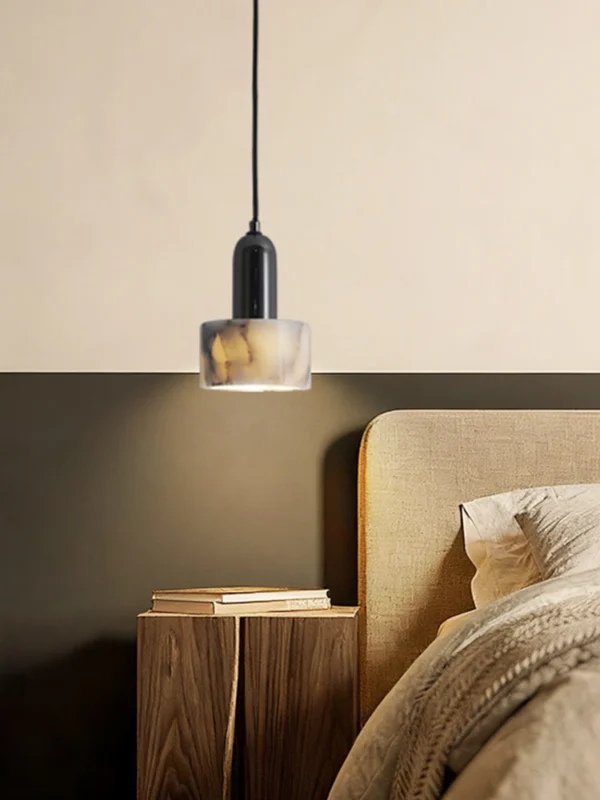
Some decorative lighting categories naturally require more planning time.
Ceramic Pendant Lights
Ceramic lighting can require forming, drying, firing, glazing, and inspection. Glaze color may vary, so sample approval and batch control are important.
Ceramic lead time may be affected by:
- New shape development
- Glaze testing
- Firing schedule
- Color consistency
- Fragile packaging
Fabric and Silk Pendant Lights
Fabric and silk pendant lights may be faster when using available fabrics and existing frames. Custom fabric colors, special shapes, or large shade sizes can add time.
Fabric lighting lead time may be affected by:
- Fabric availability
- Frame size
- Diffuser requirement
- Pleating or handmade finish
- Packaging volume
Marble and Travertine Lighting
Stone lighting needs material selection, cutting, drilling, finishing, and reinforced packaging. Natural stone variation should be discussed before production.
Stone lighting lead time may be affected by:
- Stone availability
- Veining selection
- Cutting process
- Weight and installation details
- Wooden crate or reinforced packaging
Related: Marble and Travertine Pendant Lights for Luxury Commercial Interiors
Wabi-Sabi Chandeliers and Sculptural Fixtures
Wabi-sabi chandeliers and sculptural decorative lights may require more coordination because they often use irregular shapes, handmade textures, and larger dimensions.
Lead time may be affected by:
- Fixture size
- Handmade surface treatment
- Custom frame
- Multi-part structure
- Installation hardware
- Packaging design
Related: Wabi-Sabi Chandeliers: Why Designers Choose Organic Modern Lighting
Stage 6: Packaging Lead Time
Packaging is part of the schedule, not an afterthought. Fragile decorative lighting may need custom inner protection, reinforced cartons, labels, or wooden crates.
Packaging lead time can be affected by:
- Carton size
- Foam or inner protection
- Printed labels
- Private label packaging
- Wooden crate preparation
- Packaging test
- Room or project labels
For large hotel and restaurant projects, packaging by room, floor, area, or installation phase can help the site team work faster, but it should be planned early.
Related: How to Package Fragile Decorative Lighting for International Shipping
Stage 7: Inspection Before Shipping
Inspection time should be included in the project schedule. Even if the buyer does not arrange a third-party inspection, the factory should provide photos or internal QC records before shipment.
Useful inspection checks include:
- Product quantity
- Product size
- Finish and color
- Electrical function
- Accessories
- Labels
- Packaging
- Carton marks
- Spare parts
For high-value projects, inspection before final payment and shipment can reduce after-sales problems.
Stage 8: Shipping Time
Shipping time depends on destination, shipping method, carton volume, and customs process. Buyers should separate production lead time from transport time.
Common shipping options include:
- Express courier for samples
- Air freight for urgent small batches
- Sea freight for larger orders
- Truck or local delivery after arrival
Express shipping may be fast, but it is usually expensive for large decorative lighting cartons. Sea freight is more economical for bulk orders, but the buyer must plan earlier.
Air Freight vs Sea Freight
Air freight can help when the project is urgent, but large pendant lights and chandeliers may be charged by volume. This means a lightweight fixture can still become expensive if the carton is large.
Sea freight is usually better for bulk decorative lighting orders, but the buyer should plan for production completion, vessel schedule, transit time, customs clearance, and local delivery.
For urgent projects, buyers can also split the shipment: send samples or first installation areas by air, then ship the main order by sea.
Common Reasons Custom Lighting Orders Are Delayed
Most delays happen because decisions are not made early enough.
Common causes include:
- Incomplete inquiry details
- Late electrical standard confirmation
- Repeated sample changes
- Custom finish not approved
- Material not available
- Packaging not confirmed
- Payment delay
- Buyer feedback delay
- Shipping method decided too late
- Project deadline not shared with the supplier
The easiest way to reduce delay is to share the real target date and key project milestones at the beginning.
How Buyers Can Shorten Lead Time
If the project timeline is tight, buyers can reduce lead time by choosing simpler and more predictable options.
Useful ways to save time include:
- Start from existing models
- Limit deep customization
- Use standard finishes
- Confirm electrical standard early
- Approve samples quickly
- Prepare specification sheets
- Confirm packaging before production ends
- Book shipping early
- Order spare parts together
- Avoid last-minute color or size changes
For urgent projects, ask the supplier what can realistically be accelerated and what cannot.
Timeline Planning for Hotel and Restaurant Projects
Hotel and restaurant projects often include fixed opening dates. Lighting delays can affect installation, photography, soft opening, and final handover.
Buyers should work backward from the project deadline:
- Final installation date
- Local delivery date
- Customs clearance buffer
- International shipping time
- Factory packing date
- Final inspection date
- Production completion date
- Sample approval date
- Sample arrival date
- Quotation and specification deadline
This makes the real decision deadline visible.
Related: Decorative Lighting Manufacturer Checklist
What to Ask the Supplier About Lead Time
Before confirming an order, ask:
- What is the sample lead time?
- What is the bulk production lead time?
- What can delay production?
- Which materials are already available?
- Does custom finish affect lead time?
- Does packaging affect lead time?
- When should I approve the sample?
- When should shipping be booked?
- Can the order be split into batches?
- Can spare parts ship with the main order?
- What photos or inspection records will be provided before shipment?
Clear answers help the buyer judge whether the timeline is realistic.
Work With OBBAO on Custom Lighting Timelines
OBBAO Lighting supplies custom pendant lights, ceramic pendant lights, fabric pendant lights, silk pendant lights, marble pendant lights, wabi-sabi chandeliers, and OEM/ODM decorative lighting for hotels, restaurants, villas, designers, wholesalers, retailers, and commercial interiors.
For custom lighting projects, OBBAO can help buyers plan around quotation, samples, MOQ, bulk production, packaging, inspection, and international shipping. If your project has a fixed opening date or launch schedule, share the deadline early so the product and shipping plan can be more realistic.
Send your reference image, product type, target size, quantity, destination country, electrical standard, packaging requirement, and target delivery date for a practical lead time recommendation.
FAQ
What is custom lighting lead time?
Custom lighting lead time is the total time needed for quotation, specification confirmation, sample production, sample approval, bulk production, packaging, inspection, shipping, and final delivery.
What affects custom pendant light lead time?
Lead time is affected by product type, customization level, material availability, order quantity, electrical standard, packaging requirement, inspection, and shipping method.
Are existing lighting models faster than fully custom designs?
Yes. Existing models are usually faster because the supplier already understands the structure, material, production process, and packaging method.
Should sample shipping time be included in the schedule?
Yes. Buyers should include sample production time, sample shipping time, review time, and possible revision time before planning bulk production.
How can buyers avoid lighting project delays?
Buyers can avoid delays by preparing clear specifications, confirming electrical standards early, approving samples quickly, planning packaging, booking shipping early, and sharing the real project deadline with the supplier.