
A hotel may open with every decorative fixture working correctly, yet two years later the maintenance team can face a basic problem: nobody knows which pendant model was installed. The original mood board shows one finish, the quotation another, and the final production order a third. A useful lighting project handover solves this by creating a searchable final fixture record of what was approved, supplied and, where the site team confirms it, installed.
A lighting project is not fully documented when the fixtures ship. Someone who never attended the design meetings should still be able to identify a fixture, find its final revision, locate the correct spare and give a supplier enough information for a future replacement or repeat order.
The Handover Pack Should Describe the Final Project—Not the Original Intention
A custom fixture may move from mood board to quotation, Sample V1, Sample V2, approved sample, production revision and final shipment. The active handover pack should identify the final approved or supplied information. Earlier versions may remain in an archive, but they should not force a facility manager to guess which drawing or finish is current.
This is why the final record should carry both the original project fixture code and the supplier model. A designer may call a pendant PL-01, while the supplier identifies it with an internal model number. Keeping both lets a future buyer translate between the project drawings and the supplier’s production records.
A Folder Full of Files Is Not Automatically a Useful Handover
Files named Drawing-final.pdf, Drawing-final2.pdf and Final-latest.pdf do not create document control. Each active file should connect to a fixture code, model, revision and status. A practical name such as PL-01_Drawing_Rev-C_Approved.pdf is only an example, not a universal standard, but it is far more searchable than an internal nickname such as “Lobby New Version.”
Decorative Lighting Handover Pack
| Record | Main Purpose | Typical User |
|---|---|---|
| Final Fixture Schedule | Identify what was supplied | Owner / FM / Designer |
| Product Specification | Identify final product configuration | FM / Buyer |
| Approved Drawing | Dimensions and construction reference | Installer / FM |
| Electrical Information | Identify lamp holder, driver and voltage version | Electrician / FM |
| Installation Information | Support future removal or reinstallation | Installer |
| Finish Reference | Support replacement or repeat orders | Buyer / Designer |
| Spare Parts Register | Identify available replacement components | FM |
| Warranty / Supplier Contact | Provide a route for future questions | Owner / Buyer |
| Care / Maintenance Information | Protect the material and fixture in use | FM / Housekeeping |
| QC / Inspection Evidence | Record supplied condition where required | Buyer / Contractor |
| Packing / Shipment Reference | Trace delivered items where useful | Procurement |
| Open Item List | Record anything unresolved | Project Team |
The exact required handover documents depend on the project contract, supplier scope and local requirements. A decorative-lighting supplier pack is one part of project closeout; it is not automatically the full building O&M manual.
Start the Handover Record Before the End of the Project
Do not wait until every light is installed to search old messages for files. Build the record from the lighting BOQ, then update it after sample approval, specification changes, production revision, inspection and shipment. The procurement BOQ asks what the project needs to buy; the handover register asks what final information should remain after delivery.
The same boundary applies to a custom lighting specification sheet. During design it defines one fixture. At handover, the final approved specification becomes evidence of the supplied configuration.

Final Decorative Lighting Fixture Schedule
The final schedule should be compact enough to maintain but detailed enough to distinguish configurations. Do not fill unknown values with guesses.
| Fixture Code | Area | Supplier Model | Final Revision | Material | Finish | Size | Electrical Version | Cable / Drop | Canopy | Quantity Supplied | Replacement Ref |
|---|---|---|---|---|---|---|---|---|---|---|---|
| Project code | Room / zone | Supplier reference | Approved revision | Final material | Approved reference | Verified data | Supplied version | Factory-supplied data | Final supplied type | Confirmed quantity | Part or reorder reference |
As-Built vs As-Supplied: Do Not Confuse Them
A manufacturer can normally confirm what left the factory. It may not know what installers later changed. If the factory supplied a three-metre cable and the installer cut it to 2.1 metres, the supplier record should say 3 m as supplied. The contractor or project team should record 2.1 m as installed.
A supplier should not call a document “as-built” if it only records what was manufactured and shipped.
Supplier Knows
- Model and revision
- Material and finish
- Factory cable length
- Electrical version
- Packing
- Quantity shipped
→
Site Team Confirms
- Final installed location
- Drop after adjustment
- Site wiring
- Site modifications
- Final installed configuration
The final handover record may bring both sources together, but the origin of each value should remain clear. Site photos add installed context; they do not automatically prove electrical or structural compliance.
Keep the Final Drawing, Specification and Electrical Version
Where an approved drawing exists, retain the version showing relevant overall dimensions, shade size, mounting arrangement, cable, canopy and component relationship. Move older drawings to a clearly marked Superseded archive. The final product specification should state the model, material, finish, size and key visible components without including an entire unrelated catalogue.
Record the electrical configuration actually supplied: voltage requirement, lamp holder, driver or LED information, cable and dimming version where applicable. If a specified driver has verified control information, include it. Site wiring, circuit testing, DALI addressing, scene programming and commissioning usually belong to the relevant contractor or controls team unless the contract says otherwise.
Installation information can support future removal, repair and refurbishment as well as first installation. Include assembly sequence, part identification, canopy arrangement, shade attachment or cable-adjustment diagrams only when verified product information exists. Ceiling anchors, structural capacity and local electrical compliance must be confirmed by qualified project professionals for the actual site.

Keep the Finish Reference After the Project Opens
A future replacement shade, new store or room renovation may need the same finish direction. Retain the finish code, approved sample reference, material, revision and accurate photos. The guide to lighting finish consistency explains how approved references support bulk production.
Natural and handmade materials such as ceramic, stone, leather, fabric and fibre can vary. The record should define the approved material and finish direction; it should not promise exact visual duplication forever. Likewise, future availability of a glaze, textile, driver or LED component should be reconfirmed when a replacement is requested.

A Box of Spare Parts Without a Register Is Not a Spare-Parts System
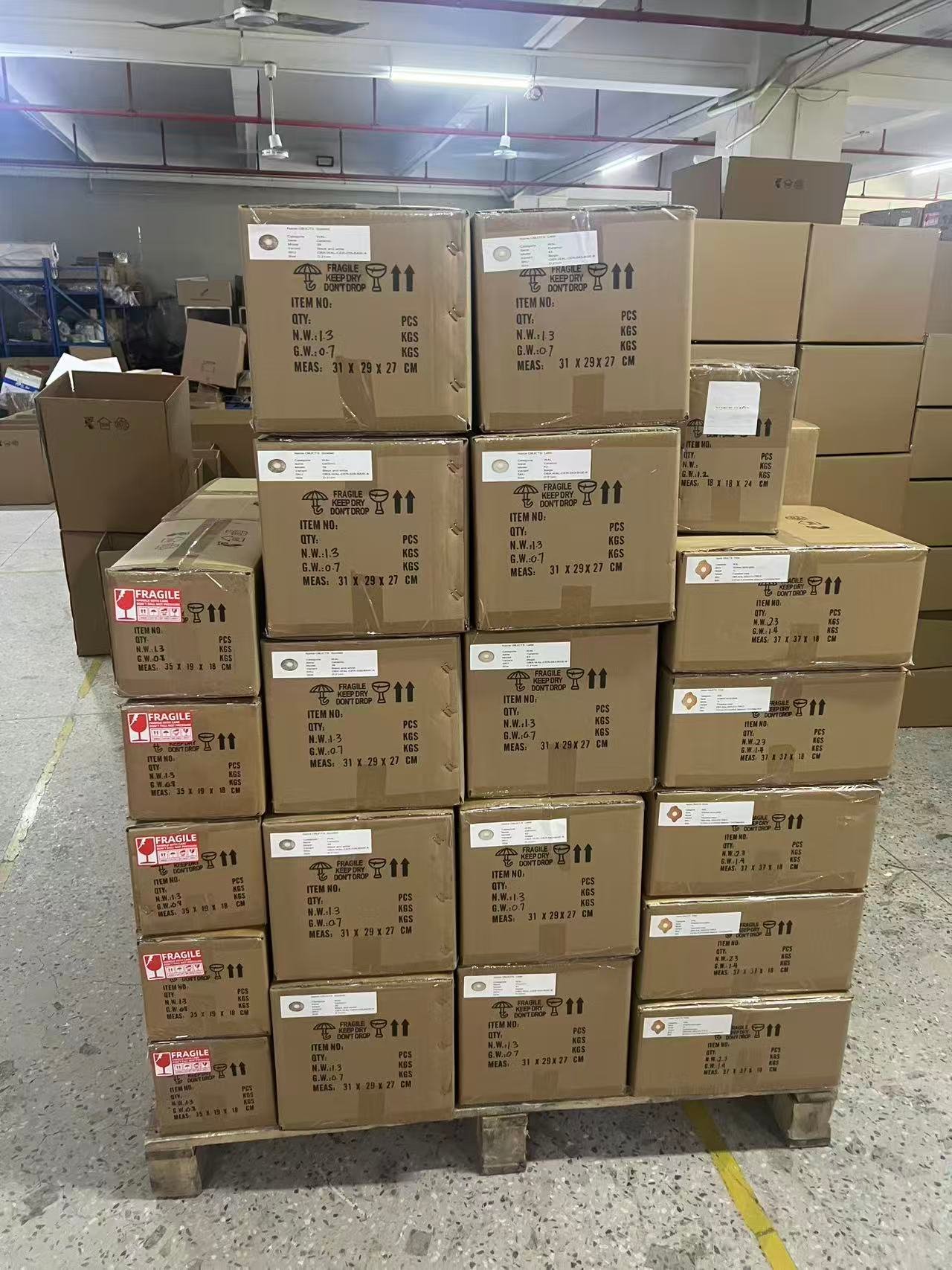
A carton marked “Hotel Lamps Spare Parts” is not useful if it mixes shades, canopies, drivers and hardware kits with no fixture codes. Link every complete spare fixture or component to the project code, supplier reference and version. The owner or facility team should add the real storage location because the manufacturer may never know where the site stores it.
| Spare Code | Fixture Code | Part | Qty | Finish / Version | Storage Location | Supplier Ref | Notes |
|---|---|---|---|---|---|---|---|
| Site reference | PL-03 | Replacement shade / complete fixture / driver / hardware kit | Confirmed qty | Approved reference | Owner / FM to complete | Supplier part reference | Compatibility or handling note |
The replacement parts planning guide covers what to consider before shipment. This handover checklist focuses on recording the spares after they are supplied, not prescribing a universal spare percentage.
Material Care Information Should Be Product-Specific
Do not apply one generic cleaning instruction to ceramic, silk, leather, stone, metal and fabric. Include verified care guidance where it exists, along with replaceable component information, lamp-base or light-source specification and any special material warning. Maintenance frequency depends on environment, mounting height, operation, manufacturer guidance and the owner’s plan; this guide does not set a universal interval.
Record the Warranty Path, Not Just the Word “Warranty”
When a project has documented warranty terms, identify the applicable order or product, period, agreed start basis, supplier contact, evidence needed for a claim and formally stated exclusions. The actual warranty is controlled by the quotation, contract, purchase order and supplier terms; this article does not create new warranty commitments or provide legal interpretation.
Record the company, sales or service contact, email and PO, PI or order reference needed for supplier lookup. Keep commercially sensitive unit prices, payment terms and bank details in a separate procurement archive unless a legitimate maintenance need exists. Not every commercial document belongs in the facility O&M pack.
Every Handover Pack Needs an Index
| Doc No. | Fixture / Scope | Document | Revision | Status | Date | File Name |
|---|---|---|---|---|---|---|
| Unique reference | Fixture code or project scope | Drawing / specification / care / record | Current revision | Final / Approved / As-Supplied / Superseded / N/A | Issue date | Searchable file name |
These status labels are examples, not global standards. Separate Active Final Documents from the archive. A practical illustrative folder structure is: 01 Final Fixture Schedule; 02 Product Specifications; 03 Drawings; 04 Electrical; 05 Installation; 06 Materials & Finishes; 07 Spares; 08 Warranty & Contacts; 09 QC / Certificates if required; and 10 Open Items.
Include Only Documents That Apply to the Supplied Configuration
A generic certificate or test report should not enter the active pack merely because it carries a familiar logo. Confirm that any certificate, report or declaration applies to the final model and configuration where the project requires it. Similarly, detailed factory QC is not needed by every facility team. An inspection report, approval photos, pre-shipment evidence or packing record may be retained when agreed.
The decorative lighting quality control checklist explains how to inspect before shipment. The handover pack only determines which final evidence remains traceable afterward. Packing lists and carton maps can also help staged installations or spare-part storage without repeating a complete packaging guide.
Do Not Hide Open Items Inside the Handover Folder
If a replacement shade, revised installation sheet, spare or applicable document is still pending, give it a visible owner and status. Closing a folder does not resolve the item.
| Item | Fixture Code | Issue | Responsible Party | Status | Target Resolution | Final Record |
|---|---|---|---|---|---|---|
| Reference | Related code | Clear description | Agreed project party | Open / In Review / Resolved / N/A | Agreed target | Link or file name when closed |
This is a practical document-control tool, not a universal construction snagging standard.
Who Usually Owns Which Information?
| Information | Manufacturer / Supplier | Designer / Consultant | Contractor / Installer | Owner / Facility Team |
|---|---|---|---|---|
| Product as supplied | Strong source | Review | Reference | Receive |
| Approved design intent | Reference | Strong source | Reference | Receive |
| Final installed location | Limited unless verified | Review | Strong source | Receive |
| Site wiring | Usually limited | Review | Strong source | Receive |
| Product maintenance guidance | Strong source where available | Review | Reference | Use |
| Spare storage location | Usually unknown | Limited | May assist | Strong source |
| Future replacement record | Support | Reference | Reference | Maintain |
Responsibilities vary by contract and project. This matrix is a planning framework, not a legal allocation of duties.
What Does O&M Mean in a Lighting Project?
O&M means operation and maintenance. Within a decorative-lighting supplier’s scope, relevant information may include fixture identification, the final specification, operation information where relevant, installation reference, care guidance, replaceable components, spares and supplier contact. A full building O&M manual is much broader and may cover HVAC, fire alarm, BMS and electrical distribution.
This guide also does not cover aiming, lux measurement, emergency testing, controls programming, circuit testing or electrical commissioning. Where the overall contract requires those records, the appropriate professional can add or reference them in the wider handover package.
Examples: Write the Record for Someone Who Was Not in the Meetings
Hotel Guest-Room Pendant
Illustrative example—not an OBBAO customer project. PL-03 is used in Guest Room Types A and B. The record maps PL-03 to the supplier model, fabric shade, approved finish, cable, canopy and electrical version. A replacement shade is labelled PL-03 so engineering can find it without searching old chat messages.
Lobby Statement Fixture
Sample V1 changed to V2. The active folder identifies V2 as Final Approved; V1 remains in the archive marked Superseded. For a large multi-part fixture, verified weight, assembly information, component identification and finish records become especially useful.
Supplier Record vs Site Reality
Illustrative only. The factory supplied a three-metre cable, and the installer cut it to 2.1 metres. The supplier record remains As-Supplied = 3 m; the contractor record becomes As-Installed = 2.1 m. A later on-site change to a shade, cable or driver should trigger an update by the project team.

Common Lighting Handover Mistakes
- Treating the original BOQ as the final record. It may still show early quantities and Sample V1.
- Keeping several “final” drawings. Mark one current revision and archive the rest.
- Losing either the designer code or supplier model. Future teams need the mapping between both.
- Calling shipment data as-built. Site changes require site confirmation.
- Providing a whole catalogue. Retain the installed fixture’s data, not unrelated models.
- Leaving spares unlabelled. Connect each component to a fixture code and version.
- Using screenshots as the only finish record. Keep the approved material, finish and revision reference.
- Forgetting cable and canopy variants. Similar-looking pendants may not be interchangeable.
- Including generic certificates. Applicability must match the supplied configuration.
- Mixing price and bank details into maintenance files. Separate commercial and facility archives.
- Hiding unresolved items. Use an open-item register with an owner and status.
- Assuming the supplier knows site modifications. The installer and owner must maintain site records.
What Buyers Should Request Before Shipment
Agree the required final specification, drawings, installation information, material and finish references, electrical product information, packing list, spare-parts list, QC record, applicable documents and warranty/support information during the PO or bulk-production stage. The custom lighting project timeline shows why project records should develop throughout quotation, sampling, production and shipment.
The sample-to-bulk production process controls how an approved sample becomes a manufactured order. Handover has a later and different purpose: it preserves the final version after supply. For multi-location brands, the same controlled record can support refurbishment or repeat ordering; see the multi-store retail lighting rollout guide.
A supplier can realistically support final product information, model mapping, customization records, sample references, available product drawings, agreed production or QC evidence, packaging records, spare/replacement information and supplier contact. The project team still needs to complete installed locations, site changes, final spare storage, site photos, local maintenance planning and commissioning records.
Send the fixture schedule, approved models and final customization details so the supplied decorative-lighting information can be organized around clear fixture codes and final revisions.
Decorative Lighting Project Handover Checklist
- Final fixture schedule updated
- Project fixture codes confirmed
- Supplier models mapped
- Final revisions identified
- Superseded drawings separated
- Final materials and finishes recorded
- Electrical versions recorded
- Cable and canopy configuration recorded
- Installation documents included where available
- Product-specific care guidance included where available
- Spare parts register completed
- Replacement references recorded
- Warranty and support path recorded
- Applicable documents identified
- QC evidence included if contractually required
- Open items listed
- Supplier contact recorded
- Commercial-sensitive files separated where appropriate
- Facility team can identify each fixture without relying on old messages
Lighting Project Handover Record
Project:
Fixture Code:
Area / Room Type:
Supplier Model:
Final Revision:
Product Type:
Size:
Material:
Finish:
Electrical Version:
Cable / Drop:
Canopy:
Light Source / Lamp Holder:
Final Quantity Supplied:
Approved Drawing:
Approved Sample Reference:
Care / Maintenance File:
Installation File:
Spare Parts:
Replacement Reference:
Warranty Reference:
Supplier Contact:
Open Items:
As-Supplied Date:
As-Built / Site Record Owner:
Handover Document Status
| Document | Fixture Code | Revision | Required? | Received? | Status | Notes |
|---|---|---|---|---|---|---|
| Document name | Project code | Current revision | Per project scope | Yes / No | Open / Final / N/A | Owner, file or follow-up |
Make the Final Lighting Record Useful Years After Handover
A good handover record lets someone who was not involved in the original project identify the fixture, understand the supplied configuration and find the right replacement reference. It also protects clear boundaries: the supplier records what was supplied, while the project team confirms what was finally installed.
The exact contents of an O&M or project handover package depend on the contract, project specification, local requirements and each party’s scope. This guide focuses on practical decorative-lighting records and does not replace project-specific contractual or regulatory requirements.
Discuss Your Project Documentation
Send OBBAO the project fixture codes, supplier models, final sizes, materials and finishes, electrical versions, cable and canopy requirements, spare-parts requirements and required supplier documents to review which decorative-lighting records can be prepared within the project supply scope.
Frequently Asked Questions
What should be included in a lighting project handover?
A practical lighting handover may include the final fixture schedule, approved product specifications, drawings, electrical configuration, installation information, finish references, spare-parts records, relevant warranty or support information and required project documents. The exact scope depends on the contract and project.
What is a lighting O&M manual?
O&M means operation and maintenance. For decorative lighting, relevant O&M information may help the owner or facility team identify fixtures, understand their final configuration, maintain them and locate replacement or support information.
Is a lighting BOQ the same as a handover fixture schedule?
No. A BOQ primarily controls design, quantity and procurement. The final handover record should reflect the final approved and supplied configuration and may also include maintenance, spare and replacement references.
What is the difference between as-built and as-supplied lighting information?
As-supplied information records what the manufacturer delivered. As-built or as-installed information should reflect the final site condition, including installation changes, and normally requires confirmation from the site team.
Should spare lighting parts be included in the handover record?
If spare fixtures or components are supplied, identify them by the related fixture code, part description and version so the facility team can use the correct spare later.
Why should lighting handover records include revision numbers?
Custom fixtures may change during sampling and production. Recording the final revision helps prevent an old drawing, finish or component version from being used for maintenance or repeat orders.