
A silk pendant that looks balanced at 600 mm diameter cannot always be enlarged to 1,500 mm by simply multiplying every dimension. As the shade becomes larger, the frame may need more support, surface tension changes, packaging becomes more complex, and the illuminated appearance can shift.
For oversized silk pendant lights, designers therefore need to specify more than diameter. The right silk pendant light size is the outcome of a coordinated review of the space, silhouette, frame, material, light transmission, suspension, sample route, packaging, and installation.
Core principle: scaling a design changes more than its dimensions. Confirm what must change before sampling or production, not after the fixture arrives on site.
Do Not Scale a Silk Pendant From Diameter Alone
Moving from a 600 mm shade to a 1,200 mm shade does not mean every component should automatically be doubled. The shade height, curvature, top width, bottom opening, ring positions, light-source position, cable, canopy, packed volume, and installation sequence may each need a separate decision.
A useful RFQ should define the intended visual outcome and the site constraints, then ask the manufacturer to review feasibility. “Diameter: 1,200 mm” is not a complete specification. At minimum, pair diameter with shade height, silhouette references, the desired lowest point, material direction, and the required lit effect.
What Changes When a Silk Pendant Becomes Larger?
| Specification | Why It Changes |
|---|---|
| Diameter | Controls horizontal presence and its relationship to the room or furniture plan. |
| Shade height | Changes the overall silhouette and the fixture’s vertical presence. |
| Frame | Must hold the intended form at the final dimensions. |
| Silk or fiber surface | May show different tension, movement, density, or variation at a larger scale. |
| Bottom opening | Affects the view of the lamp, inner structure, and diffuser. |
| Light source | Changes brightness, hotspots, glare, and frame visibility. |
| Cable and total drop | Set the vertical proportion and the actual lowest point. |
| Canopy | Must coordinate with the suspension points, ceiling interface, and fixture scale. |
| Finished weight | Depends on the final frame, hardware, canopy, and electrical components. |
| Packaging | Large dimensions can increase carton volume and shape-protection requirements significantly. |
| Assembly | A large fixture may need partial disassembly and controlled on-site assembly. |
Step 1: Start With the Space, Not the Product Photo
Begin with the ceiling height, room width and length, furniture layout, installation zone, and principal viewing directions. A 1,200 mm pendant can dominate a private dining room yet feel modest in a hotel lobby. A rendering is useful, but it should be accompanied by dimensions so the apparent scale can be tested in plan and elevation.
Visual weight and physical weight are different. A large silk or silk-fiber surface can create volume without the dense visual mass associated with stone or thick metal. That does not make the finished fixture weight negligible: the frame, suspension, hardware, lamps, diffuser, and canopy still contribute. Confirm the actual finished weight only after the final design is defined.
Diameter and shade height must be designed together
A wide, shallow shade reads horizontally. A narrower, taller shade reads as a more vertical, sculptural object. The BOQ should therefore record both the target diameter and shade height. For an irregular form, add the top width, maximum width, bottom opening, and overall height rather than reducing the shape to one number.
Preserve the silhouette when scaling up
Compare the top width, maximum width, bottom opening, curves, transitions, and total height. Increasing diameter alone can make a familiar design appear too flat, bulky, or open. Ask for a dimension drawing or scaled elevation before approving a new size.
Step 2: Review the Internal Frame
The frame establishes the shape of a large silk pendant. When scale changes, review ring positions, support members, connection points, suspension points, and whether any sections are intended to detach. The purpose is not to prescribe a universal rod thickness; it is to confirm that the final frame can hold the approved silhouette.
Frame feasibility should be reviewed for the final dimensions so the fixture does not sag, twist, lean, or arrive with a shape that differs from the drawing. If the shade will be partially assembled on site, confirm how connections are identified and how the intended curvature is restored.
Step 3: Clarify the Material and Approve the Surface
“Silk” is not one universal material description. A product may be described as silk, silk fiber, mulberry silk, or textured silk. Confirm the actual material listed for the chosen model, together with color, texture, surface character, and acceptable handmade variation. Do not apply a material claim from one product to the entire category.
A small swatch can confirm texture and color direction, but it cannot fully represent the surface movement, fiber distribution, wrinkle pattern, or visual density of a 1,500 mm shade. Choose the approval method according to risk: material swatch, partial surface sample, scale mock-up, full fixture sample, or controlled production photos.
Large surfaces also make small tone differences more visible, particularly in white, off-white, beige, and other warm neutrals. For repeated silk pendant lights for hotels or restaurants, use an approved material reference rather than relying on a screen image alone.
Step 4: Review the Pendant Both Off and On
The OFF review covers silhouette, surface, color, texture, and visible craftsmanship. The ON review covers transparency, glow, shadow, hotspot risk, bulb visibility, frame visibility, and the inner structure. An oversized silk pendant can look substantially different when illuminated than it does in a white-background product photograph.
Silk does not have one fixed level of light transmission. The result depends on the actual material, density, layers, color, diffuser, internal structure, and light source. If the light effect is central to the design, request lit photographs or a lit sample under a documented lamp configuration.
Check hotspots, the light source, and the bottom view
A larger shade does not automatically create more even light. Confirm lamp position, number of lamps, LED format, distance from the shade, diffuser or lining, and whether the frame becomes visible. Also review the fixture from below. In restaurants, lobbies, stair voids, and double-height rooms, occupants often see the bulb, wiring, frame, inner finish, diffuser, and bottom opening before they see the side profile.
Have a large silk pendant in a rendering but not sure whether the scale is practical to manufacture? Send the room dimensions, ceiling height, reference image, and target fixture size so the shade proportion, frame, drop, and sample route can be reviewed before production.
Applications: Restaurant, Lobby, Suite, and Double-Height Space
Oversized silk pendants in restaurants
Above a table, compare shade width with the furniture plan, diner sightlines, glare, service access, and the proposed lowest point. This article focuses on silk-specific manufacturing decisions; use the restaurant pendant lighting guide for the wider table-layout, spacing, and hanging-height discussion.
Oversized silk pendants in hotel lobbies
A lobby adds longer viewing distances, multiple viewing angles, larger room volume, and more complex maintenance. Test whether one large fixture or a cluster better serves the focal point. Neither option is automatically correct: a single shade concentrates visual impact, while a cluster can build a vertical composition from modular elements.
Suites, villas, and statement seating zones
Large silk fixtures are not limited to lobbies. A medium-large sculptural pendant can suit a suite, villa, lounge, or boutique retail area when furniture proportion, head clearance, cleaning access, and the room height have been checked.
Double-height spaces need more than a longer cable
Placing a standard pendant on a very long cable can leave the fixture visually undersized. Shade volume and suspension drop should be considered together. For broader room-scale questions, see the chandelier size and high-ceiling guide.
Step 5: Choose One Large Shade or a Cluster
One oversized shade
A single sculptural silk pendant light creates a concentrated focal point. Confirm the frame, shipping route, canopy, suspension, packing volume, and assembly method at the proposed scale.
Cluster
A cluster can fill vertical space, use multiple heights, and sometimes make modular replacement easier. It also adds a cable schedule, canopy exits, spacing, position control, and installation labels. Identify every unit by fixture code—such as A, B, and C—with its model, size, cable length, and position. “Three silk lights” is not enough for an installer.
Step 6: Specify the Lowest Point, Suspension, and Canopy
Do not specify only “3 m cable.” Record the ceiling height, fixture height, desired lowest point, and resulting suspension length. This prevents the shade itself from being omitted from the drop calculation.
The canopy may need to change when the fixture becomes larger. Confirm its size, shape, finish, mounting interface, cable exit positions, and visual proportion. A cluster also needs the number and spacing of exits. These are coordination questions, not structural engineering instructions.
Once the design is defined, obtain the final finished weight. The responsible contractor, installer, or structural professional should confirm the ceiling fixing and support based on the actual finished fixture, mounting system, and site condition.
Step 7: Decide How the Fixture Will Ship and Assemble
A fully assembled fixture allows the factory to check the complete shape, but it may require a large carton. A partially disassembled fixture can reduce volume, yet it needs clear instructions, part labels, protected connection points, and an assembly method that restores the approved silhouette.
Never assume a silk shade can be folded for shipping
Some designs may be foldable, compressible, or made with removable frame sections; others are not. Compressing a shade that was not designed for folding can cause permanent deformation. Confirm the actual construction of each model before selecting a shipping method.
Step 8: Calculate Packaging Risk Before Finalizing the Size
For a large silk or fiber fixture, logistics may be driven more by volume than by weight. Confirm packed diameter, packed height, carton count, CBM, disassembly route, and shape protection. The objective is to reduce shipping volume without destroying the approved silhouette.
Packaging must also prevent dust, rubbing, compression, and contact between the surface and hardware. The protection method should be selected for the actual product. For the complete system beyond oversized silk shades, refer to OBBAO’s decorative lighting packaging guide.
Step 9: Choose the Sample Strategy
A material sample confirms texture and color direction. A scale mock-up tests proportion but may not represent the final finish or light effect. A full fixture sample can review shape, frame, light, installation, and packaging together.
Not every project requires a full-size sample. It becomes more valuable for a new oversized dimension, a new frame, an unusual silhouette, a key lobby statement, a new material, or a high-quantity repeated installation. A reduced sample should not be treated as complete proof of the full-size version; document which elements remain unverified.
Use the custom lighting sample approval checklist to structure the review.
Step 10: Define Repeatability, Maintenance, and Replacement
For bulk production, define the overall dimensions, silhouette, frame, acceptable color range, surface direction, cable, canopy, electrical configuration, and packaging. A handmade surface should not be expected to reproduce like a printed graphic, but the overall shape and approved project criteria must remain controlled.
Review multiple fixtures together to compare relative size, tone, shape, cable lengths, and visual rhythm. OBBAO’s decorative lighting quality control checklist covers the broader pre-shipment review.
Plan maintenance access for dust removal, fixture removal, and light-source replacement—especially at height. If a shade is replaceable, record the model, size, material, frame, finish, cable, canopy, and revision from the first order. See the replacement parts planning guide for a project record structure.
Large Silk Pendant Scale Examples
The following are real OBBAO product references, not universal size limits. Any unlisted or larger dimension still requires a model-specific feasibility review.
| Model | Published size | Silhouette | Project consideration |
|---|---|---|---|
| OBS035 | 50 × 65, 60 × 80, 80 × 110 cm | Rounded vertical suspension | The family demonstrates that diameter and height change together; larger unlisted sizes are not implied. |
| OBS062 | 40 × 53, 40 × 85, 40 × 165 cm | Slender vertical composition | Shows how a consistent width can support very different vertical proportions. |
| OBS046 | Available upon request | Fluid silk-fiber form | Confirm the selected dimensions, frame, light source, and packing route before quotation. |
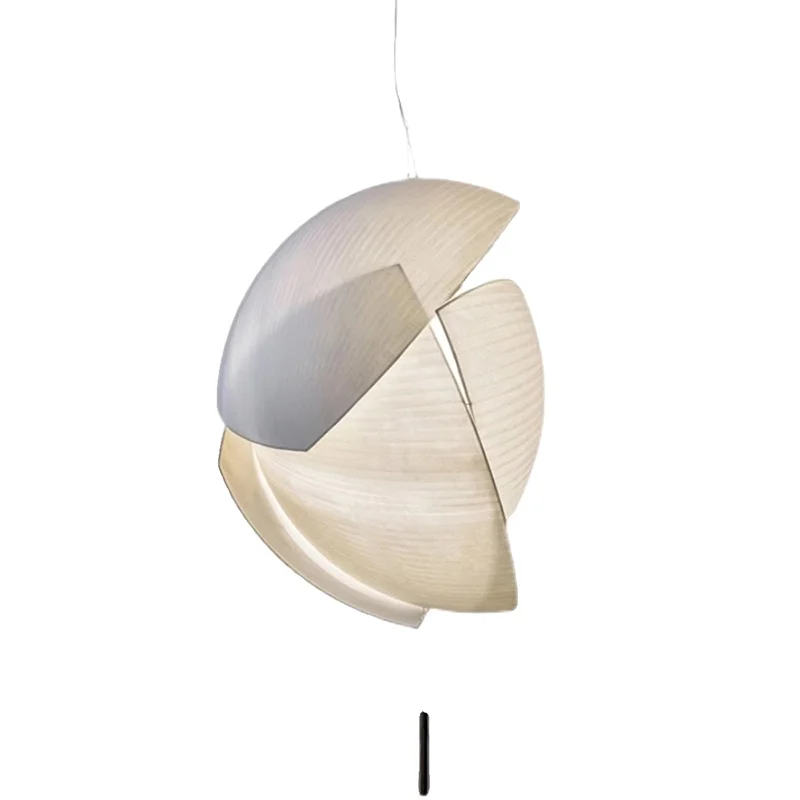
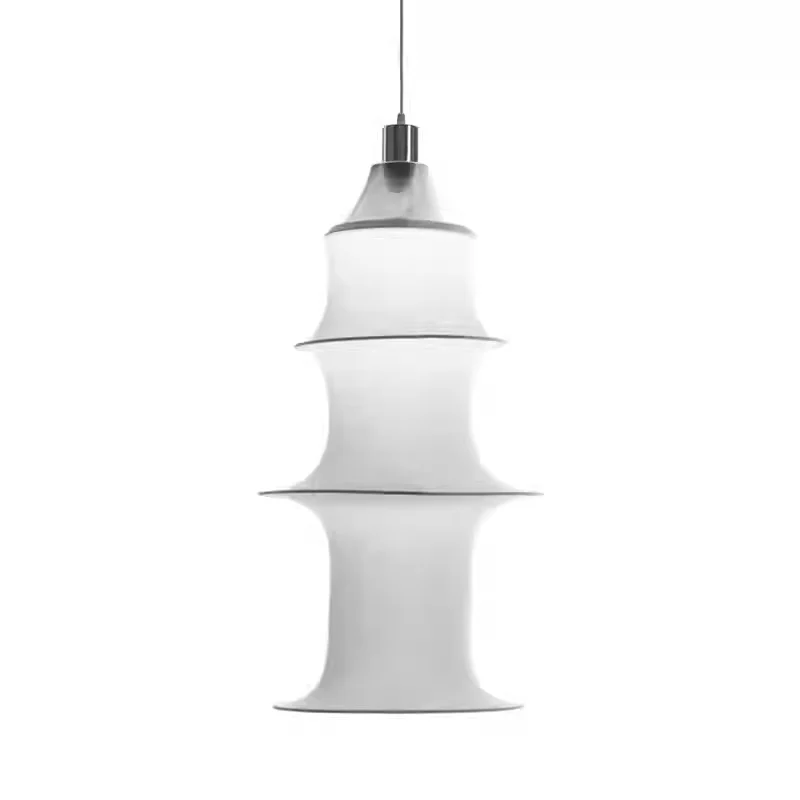
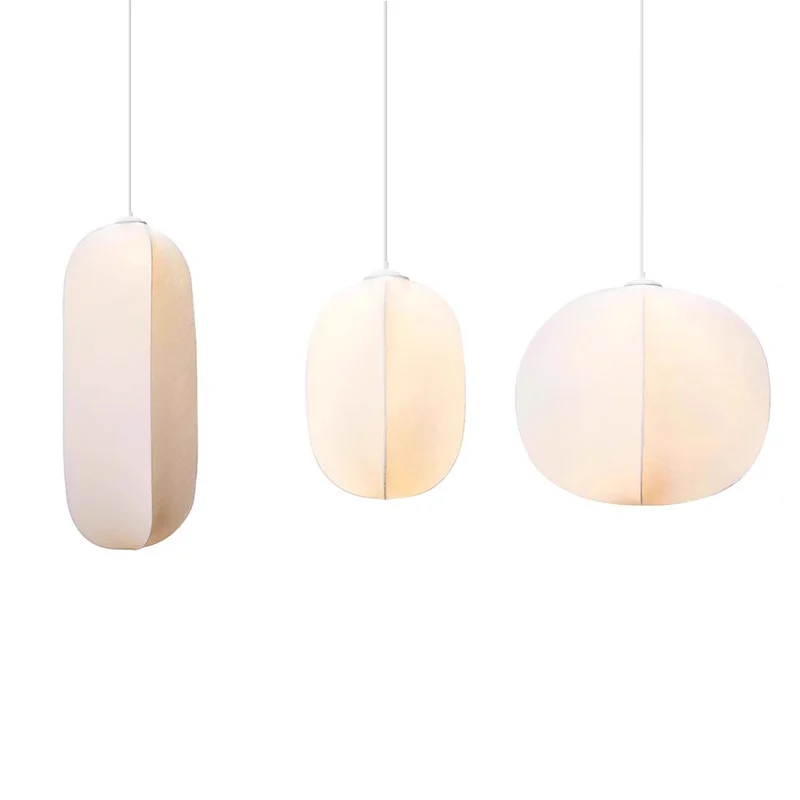
Explore more verified models in the silk pendant lights collection. An existing model may possibly be made larger, but feasibility depends on its frame, material, proportion, light source, suspension, packaging, and installation route.
Oversized Silk Pendant Specification Checklist
- ☐ Room dimensions and ceiling height
- ☐ Target diameter and target shade height
- ☐ Desired lowest point
- ☐ Silk or fiber material confirmed
- ☐ Color and texture confirmed
- ☐ Frame feasibility reviewed
- ☐ OFF appearance, ON appearance, and bottom view reviewed
- ☐ Light source confirmed
- ☐ Cable or suspension and canopy confirmed
- ☐ Finished weight confirmed
- ☐ Assembly route and packaging method confirmed
- ☐ Sample strategy confirmed
- ☐ Installation and maintenance access reviewed
- ☐ Replacement record prepared
What to Send Before Requesting an Oversized Silk Pendant Quote
- Floor plan, elevation, and project rendering
- Room dimensions and ceiling height
- Target fixture location
- Approximate diameter and target fixture height
- Desired lowest point
- Reference image and material or color direction
- Quantity and destination market
- Installation deadline
If the final size is not yet known, send the space dimensions and rendering so the scale and manufacturing feasibility can be discussed before a quotation is fixed.
Example: A Silk Statement Pendant for a Hotel Lobby
Illustrative example — not an OBBAO customer project.
Consider a large reception volume with a long viewing distance, a central ceiling position, and a soft organic design intent. Direction A uses one large sculptural shade, requiring coordinated review of the frame, light effect, packing, suspension, and installation. Direction B uses a three-fixture cluster, adding canopy layout, individual cable lengths, positions, and fixture labels. Both can be valid; the correct direction depends on the architecture, visual target, service route, and installation constraints.
Common Mistakes When Specifying Oversized Silk Pendants
- Choosing size from a product photo without room dimensions.
- Increasing diameter without reviewing shade height.
- Scaling the shade without reviewing the frame.
- Assuming all silk materials transmit light the same way.
- Approving only the OFF photograph.
- Ignoring the fixture’s bottom view.
- Ordering extra cable without defining the lowest point.
- Assuming a standard canopy suits a much larger fixture.
- Assuming the shade can be folded for shipping.
- Finalizing size before checking packaging volume.
- Using a reduced sample as complete proof of a larger version.
- Forgetting maintenance and replacement access.
Frequently Asked Questions
Can silk pendant lights be made in oversized dimensions?
Many designs may support larger custom dimensions, but feasibility depends on the frame, material, proportion, suspension, and packaging. Review the final size by model.
Can I simply double the dimensions of an existing silk pendant?
Not necessarily. Increasing the size can change the frame requirements, silhouette, surface behavior, light effect, finished weight, and packaging.
Are silk pendant lights lightweight?
The shade material may create a visually light appearance, but actual finished weight depends on the frame, hardware, canopy, and light source. Confirm the final weight for the selected design.
Do large silk pendant lights need a full-size sample?
Not every project does. A full-size sample can be valuable for a new scale, frame, material, or important statement fixture. Lower-risk projects may use other approval methods.
Can oversized silk pendant lights be folded for shipping?
Only if the specific fixture is designed for folding or disassembly. Compressing a shade that is not designed for it can cause permanent deformation.
What information should I provide for a custom oversized silk pendant light?
Provide room dimensions, ceiling height, a rendering or reference image, target size, desired lowest point, material and color direction, quantity, and destination market.
Specify the Scale Before Building the Fixture
Oversized silk pendant lights require more than a larger diameter. Send OBBAO your project rendering, room dimensions, ceiling height, target diameter, target shade height, desired lowest point, material and color direction, quantity, and destination market. The team can then review the scale, frame, suspension, lighting effect, and packaging direction before sampling.
Discuss an Oversized Silk Pendant Explore Silk Pendant Lights